

The Modern Insurrection Act: A Colonial And Racial History
Photo: Pete Kiehart/Bloomberg via Getty Images
The Shaky Structural Foundations of the New Nondelegation Doctrine
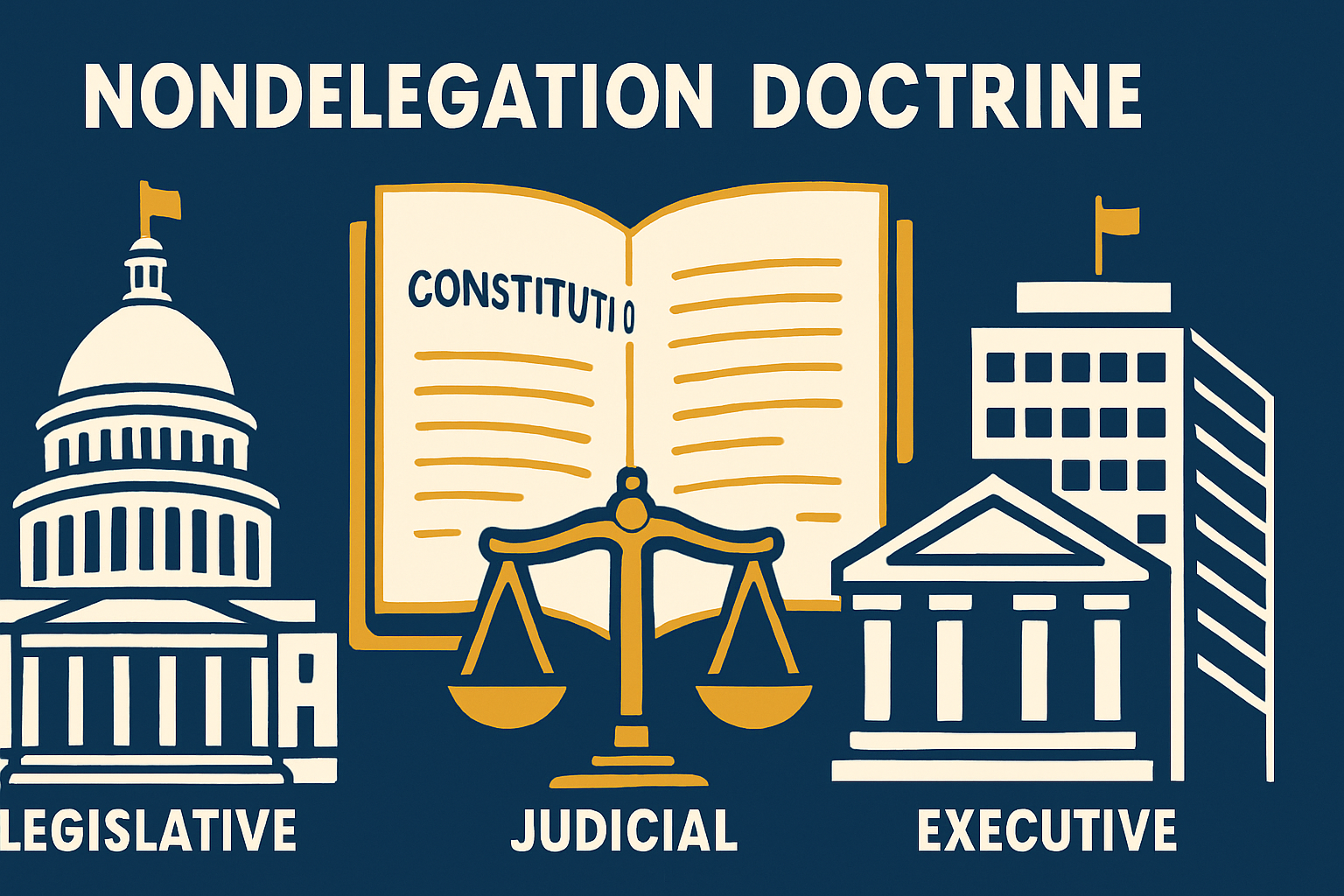
The Supreme Court is in the process of rethinking the nondelegation doctrine, which for most of its existence has imposed only minimal constraints on Congress’s power to delegate policymaking authority to the executive branch. The Court’s gravitation towards a more robust nondelegation rule—or what I call the new nondelegation doctrine (“NND”)—has in turn provoked a torrent of scholarly criticism, much of which casts doubt on the historical bona fides of the Court’s emergent project. These historical criticisms, however, do not directly engage with another line of arguments that the NND’s most prominent judicial defender, Justice Neil Gorsuch, has recently set forth. These arguments, I argue, are best understood as claims about constitutional structure, predicated on the idea that an unconstrained congressional power to delegate would “make no sense” in relation to several big-picture values and objectives that the Constitution’s system of separated powers exists to promote.
This Article critically examines Justice Gorsuch’s structural defense of the NND. From a methodological standpoint, I argue that Justice Gorsuch’s structural logic is questionable in light of: (a) its incomplete presentation of the values and objectives associated with the separation of powers (not all of which carry an obviously “anti-delegation” valence); (b) its failure to account for already-in-effect constitutional doctrines that safeguard many of the values and objectives said to necessitate the NND; and (c) its general refusal to consider the possibility that the rigors of the Article I lawmaking process already operate as an adequate safeguard against problematic delegations of regulatory authority. The Article further suggests that several of the “anti-delegation” values said to justify the NND have a more complicated relationship to the doctrine than Gorsuch seems to suggest. I argue, among other things, that Justice Gorsuch’s structural reasoning: (1) oversimplifies the relationship between the NND and the value of negative liberty by failing to consider ways in which a Congress unable to delegate would be more likely to adopt liberty-infringing statutes that subsequent political majorities would struggle to undo; (2) oversimplifies the relationship between the NND and the goal of empowering political minorities by overlooking the possibility that a Congress unable to delegate would be thwarted in its attempts to establish regulatory regimes that groups underrepresented in the political process might turn out to support; and (3) oversimplifies the relationship between the NND and democratic accountability by failing to consider the doctrine’s power-augmenting effects on the federal judiciary—the least accountable of all three branches of the federal government. The analysis leaves open the possibility that there might yet exist a structural case to be made in favor of the NND. But I ultimately conclude that Justice Gorsuch and his pro-NND colleagues have not yet carried the high burden they ought to bear in calling for such a significant and wide-ranging doctrinal reform.